


Interlocking Garage Floor Tiles — Everything You Need to Know
Interlocking Garage Floor Tiles — Everything You Need to Know
Thinking about upgrading your garage floor with interlocking tiles but drowning in questions? You're not alone. Garage flooring is one of those purchases where a single wrong assumption — thickness, material, installation — can cost you hundreds of dollars and a wasted weekend.
This guide answers every question we hear from homeowners and business owners, in plain English, with the numbers that actually matter.
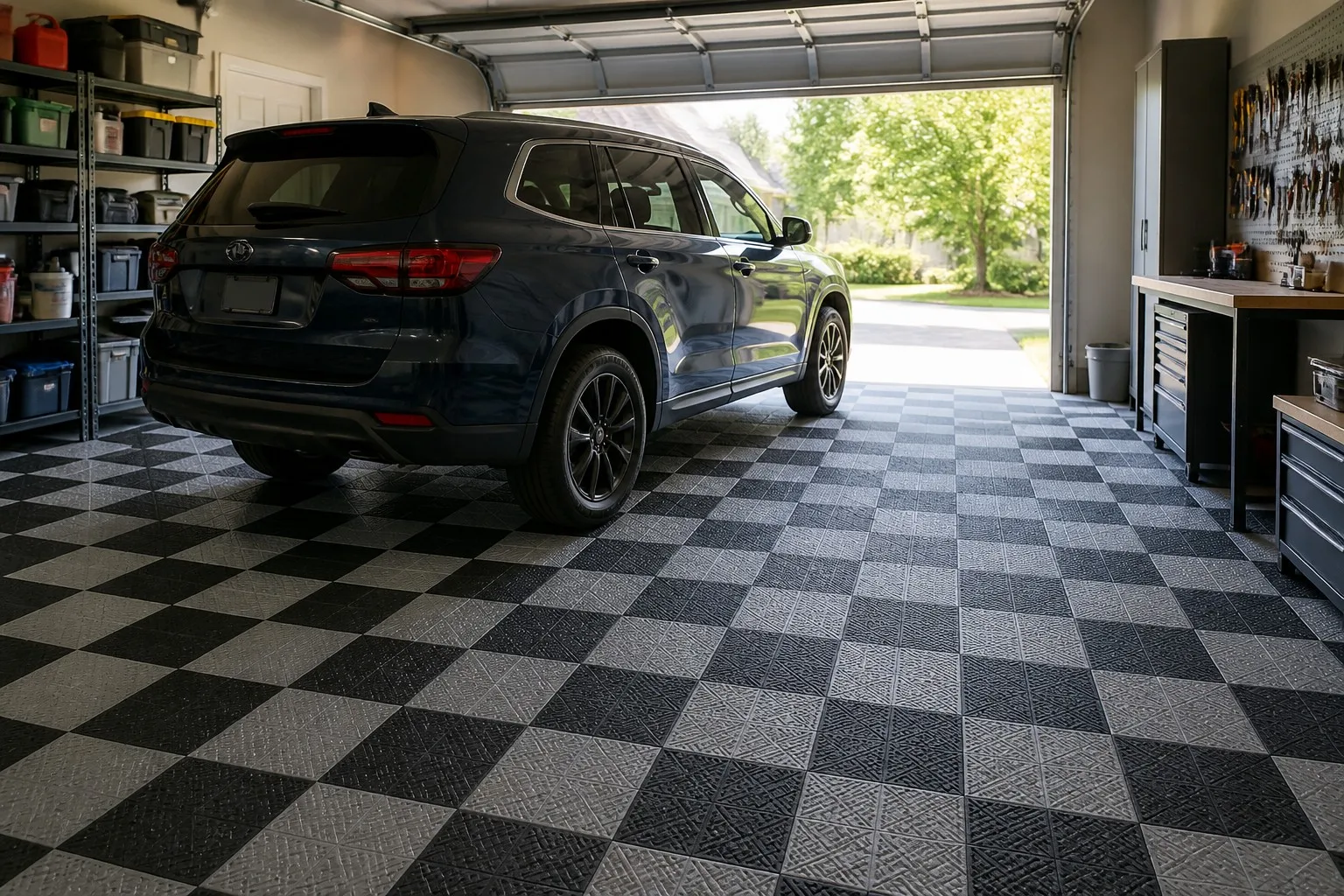
What Are Interlocking Garage Floor Tiles?
Interlocking garage floor tiles are modular plastic tiles that snap together over your existing concrete — no glue, no tools, no curing time. Each tile connects to its neighbors with built-in locking pins, creating a single, seamless floating floor that can be removed and reused if you ever move.
They're the fastest-growing alternative to epoxy paint because they solve epoxy's three biggest problems: surface prep, downtime, and permanence.
What Is the Right Tile Thickness for You?
Thickness determines how much weight your floor can handle. Arlott offers five options, and here's the honest breakdown:
- 18mm — light-duty home parking and storage; up to 60,000 lbs rolling load
- 20mm — the all-rounder for most home garages and hobby workshops; up to 80,000 lbs
- 30mm — heavy-duty for detailing shops and daily commercial use; 80,000+ lbs
- 40mm — industrial grade for factories and equipment bays; up to 100,000 lbs
- 50mm — extreme duty for military and aerospace; up to 120,000 lbs
Not sure? 20mm is the safe default for a home garage. If you run a business on the floor, step up to 30mm. Our thickness, material & color guide walks through each option in detail.
What Are They Made Of?
Quality tiles are made from UV-stabilized polypropylene copolymer (PP). That combination matters:
- Chemical resistance — oil, antifreeze, brake fluid, and gasoline wipe right off
- UV stability — won't fade, chalk, or turn brittle after years of sunlight
- Temperature tolerance — survives freezing winters and blistering summers without cracking
- Recyclable — a more sustainable choice than poured coatings
Avoid cheap recycled plastic or soft PVC tiles — they crack under impact, dent under jacks, and fade within a few seasons.
How Hard Is Installation?
This is the question we love to answer: you can tile a standard two-car garage in one weekend, with zero special skills.
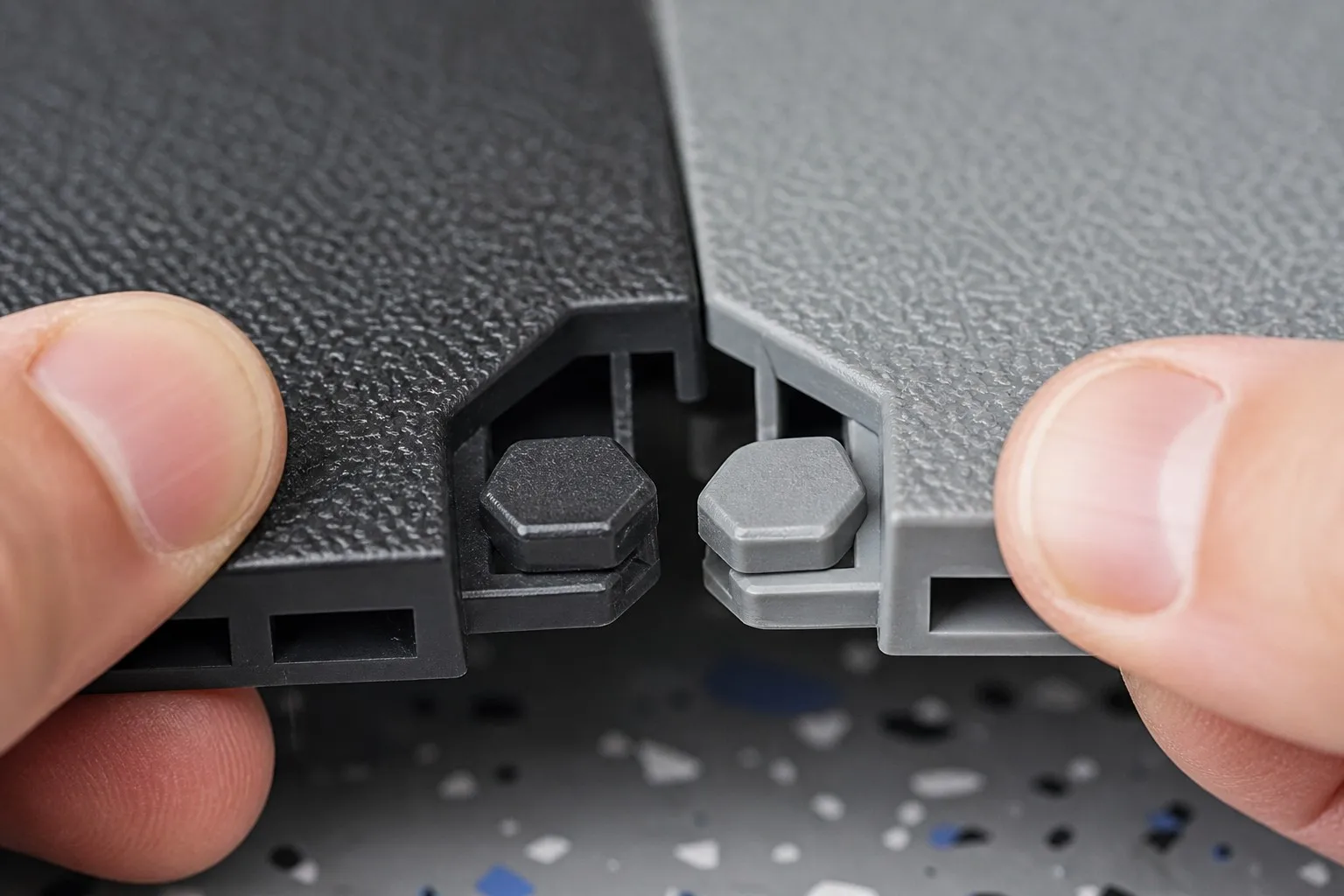
Each tile simply snaps into the next — the hexagonal locking pins seat themselves and hold firm. You only need a utility knife (or a tile cutter) for edge tiles against the walls. No adhesive, no expansion gaps to calculate, no curing smell.
Follow our step-by-step weekend installation guide and you'll be parking on your new floor by Sunday evening.
Can They Really Hold a Car?
Yes — comfortably. Even the entry-level 18mm tile carries up to 60,000 lbs of rolling load, far more than any passenger vehicle or pickup applies. The weight distributes across the interlocked grid, and the channeled understructure transfers it evenly to the concrete below.
For car lifts, heavy machinery, or daily commercial traffic, choose 30mm or thicker. For normal home parking, 20mm is already overkill in the best possible way.
How Do You Clean Them?
Easier than any floor you've owned:
- Daily — sweep or shop-vac
- Weekly — mop with mild soap and water
- Stubborn stains — pressure wash or wipe with a diluted degreaser; the channeled surface keeps liquids flowing to the edges
See our full cleaning and maintenance guide for the complete routine and the one product you should never use.
Can I Install Them Over Existing Epoxy or Concrete?
Yes. Interlocking tiles install directly over clean, level concrete — even over flaking or worn epoxy. In fact, they're the standard fix for a failed epoxy floor: instead of grinding and re-coating, you simply cover it.
Because the tiles float on top, they also protect the concrete underneath and allow airflow, which prevents moisture buildup and musty odors.
How Long Do They Last?
Arlott tiles carry a 20-year manufacturer warranty. And because they're modular, a damaged tile is replaced in 30 seconds — no patching compound, no color-matching nightmares, no full redo. Fifteen years from now, your floor can still look brand new.
How Much Do They Cost?
Less than you think — especially compared with professional epoxy installation, which requires grinding, patching, multiple coats, and 3–5 days of downtime.
Because Arlott sells factory-direct, you skip the distributor markup. Pricing depends on thickness and quantity; bulk commercial projects qualify for volume discounts. Contact our team for a quote on your exact square footage.
How Many Tiles Do I Need?
One 400×400mm tile covers 1.72 sq ft. Simple math:
- Measure your garage length × width in feet
- Divide by 1.72 to get the tile count
- Add 10% for cuts and replacements
Example: a 20 ft × 20 ft garage is 400 sq ft ÷ 1.72 = 233 tiles + 10% = 257 tiles.
Can I Mix Colors and Patterns?
This is the fun part. Arlott tiles come in 14 standard colors, so your floor can be anything from a classic charcoal grid to a bold checkerboard, two-tone border, or a center racing stripe in your brand colors.
Order matching edge strips and corner pieces at the same time — they give the floor a clean, professional perimeter and protect tile edges from rolling equipment.
Do They Work in Extreme Climates?
Yes. UV-stabilized polypropylene is engineered for temperature swings. The tiles handle freezing winters without becoming brittle and hot summers without warping — one of the reasons they're exported to 30+ countries across four climate zones.
The Bottom Line
Interlocking garage floor tiles are the fastest, most durable, and most reversible way to upgrade a garage — for homeowners and businesses alike. The decisions that matter are few: pick the right thickness, insist on UV-stabilized PP, and choose a color scheme you'll love for the next 20 years.
Ready to get started? Browse the Arlott garage floor tile collection in 14 colors and five thicknesses — or contact our team for free advice on sizing your exact space.


